Tiered Loyalty Models Reshape Customer Retention Tactics for Mid-Sized UK Betting Operators
Written by Sage Patterson · Aug 21, 2026
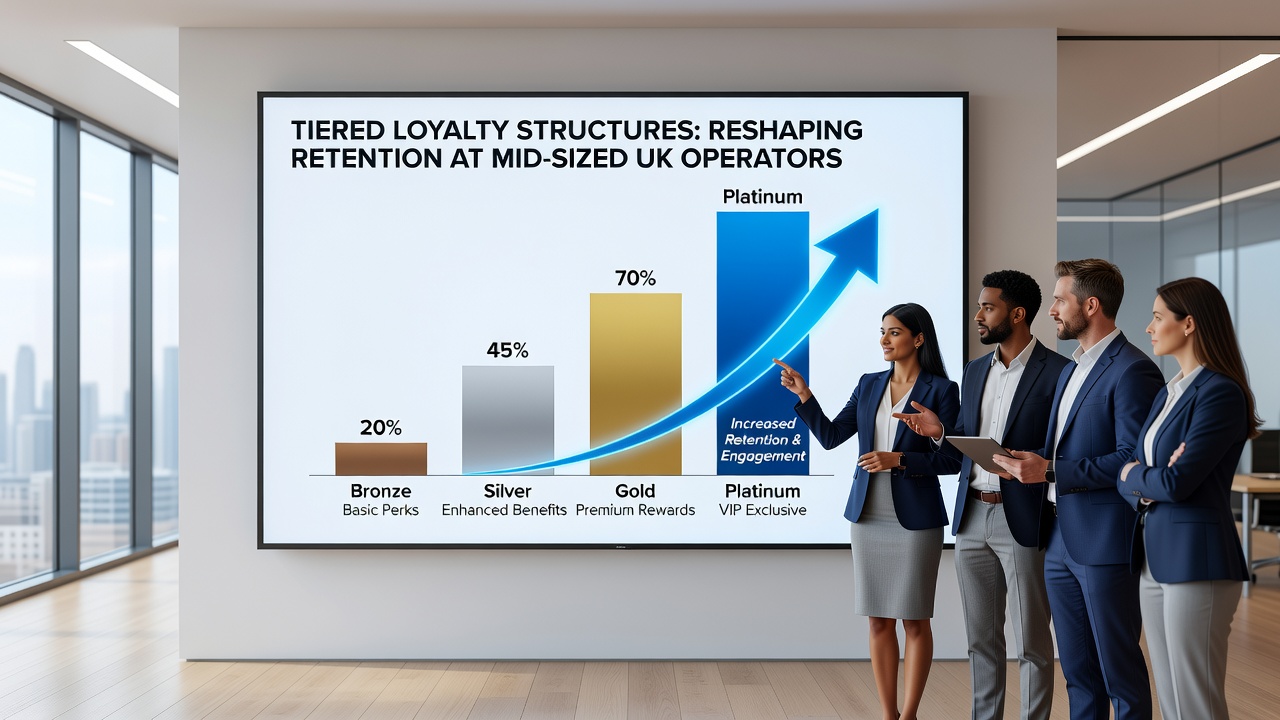
Tiered Loyalty Models Reshape Customer Retention Tactics for Mid-Sized UK Betting Operators
Mid-sized UK operators have shifted focus toward structured loyalty tiers that reward ongoing activity with escalating benefits, and this approach connects directly to measurable changes in how these firms hold onto active accounts. Points accumulate across bets and deposits, then unlock status levels that deliver tailored perks such as accelerated cashouts, exclusive event access, and personalized bonus multipliers. Observers note that operators began rolling out these systems more widely after 2024, with adoption accelerating into 2025 and continuing through August 2026.
Research indicates that retention improves when customers see clear progression paths rather than one-off promotions. A mid-sized operator might segment users into four or five tiers, where entry-level participants earn base points while higher tiers receive priority support lines and reduced wagering requirements on rewards. Data from industry analyses shows these layers encourage repeat sessions because participants track their status and adjust behavior to reach the next rung.
Mechanics Behind Tier Progression
Points systems operate on a combination of deposit volume, bet frequency, and sometimes game variety, while status resets occur on annual or rolling cycles. Operators adjust thresholds seasonally, and those adjustments align with major sporting calendars so that football and horse racing peaks coincide with promotional pushes that help users climb tiers. Experts have observed that transparent rules displayed in account dashboards reduce confusion and support higher engagement rates across the customer base.
Additional layers often include time-limited challenges that award bonus points or instant tier boosts, and these mechanics integrate with existing account features such as responsible gambling tools. Figures reveal that mid-sized firms track tier movement weekly, allowing them to identify at-risk accounts before they lapse and intervene with targeted offers that match the user's current status level.
Retention Outcomes Reported by Operators
Case studies from several mid-sized platforms indicate that customers who reach at least the second tier demonstrate longer account lifespans compared with those who remain at entry level. Retention metrics improve because higher-tier users receive communications that reference their specific benefits, creating a sense of ongoing value. Industry reports highlight that these users also show increased average session lengths, which stems from the perceived advantage of maintaining active status.

Operators have refined their data models to predict when a user might drop a tier, and they deploy preemptive offers such as double points weekends or status protection periods. According to findings shared by the European Gaming and Betting Association, similar tiered structures in other European markets correlate with steadier revenue streams because participants return more consistently to protect their benefits.
Technology Supporting Tier Management
Backend systems now integrate real-time point tracking with customer relationship platforms, and this integration allows operators to surface personalized progress bars within mobile apps. Developers have built notification sequences that alert users when they approach a new threshold, and these alerts include clear next-step actions such as minimum deposit amounts required for advancement. Mid-sized operators often partner with third-party loyalty software providers to handle the complexity without building everything internally.
Security protocols ensure that point balances and tier statuses remain accurate during high-traffic periods, while audit trails support compliance checks. Researchers discovered that platforms using automated tier calculations experience fewer disputes over reward eligibility, which in turn supports smoother customer service interactions.
Comparative Approaches Across Regions
Patterns observed in the UK mirror developments documented by the American Gaming Association in North American markets, where tiered rewards have become standard among regional operators. Although regulatory frameworks differ, the core principle remains consistent: structured progression encourages sustained participation. Mid-sized UK firms have adapted these models to fit local preferences around sports betting and casino content, and they continue to test variations based on user feedback loops.
Conclusion
Tiered loyalty structures have become central to retention planning at mid-sized UK operators because they replace sporadic promotions with ongoing incentives that scale alongside customer activity. Systems track progress, deliver differentiated rewards, and use data to anticipate churn, all of which contribute to steadier account retention. As of August 2026 these programs continue to evolve through technology upgrades and refined segmentation, and operators monitor outcomes closely to maintain alignment with user expectations and regulatory requirements.