Recurring Loyalty Frameworks and Their Influence on Long-Term Participation at Independent Betting Sites
Written by Paul Lorenz · Sep 1, 2026
Recurring Loyalty Frameworks and Their Influence on Long-Term Participation at Independent Betting Sites
Lesser-known wagering sites often build recurring loyalty structures around point accumulation systems that reset on monthly cycles while offering tiered access to enhanced withdrawal speeds and personalized cashback percentages. Operators track these metrics through proprietary software that logs deposit frequency alongside wager volume, then translate the data into reward tiers that unlock automatically after thresholds are met.
Mechanics Behind Tiered Reward Cycles
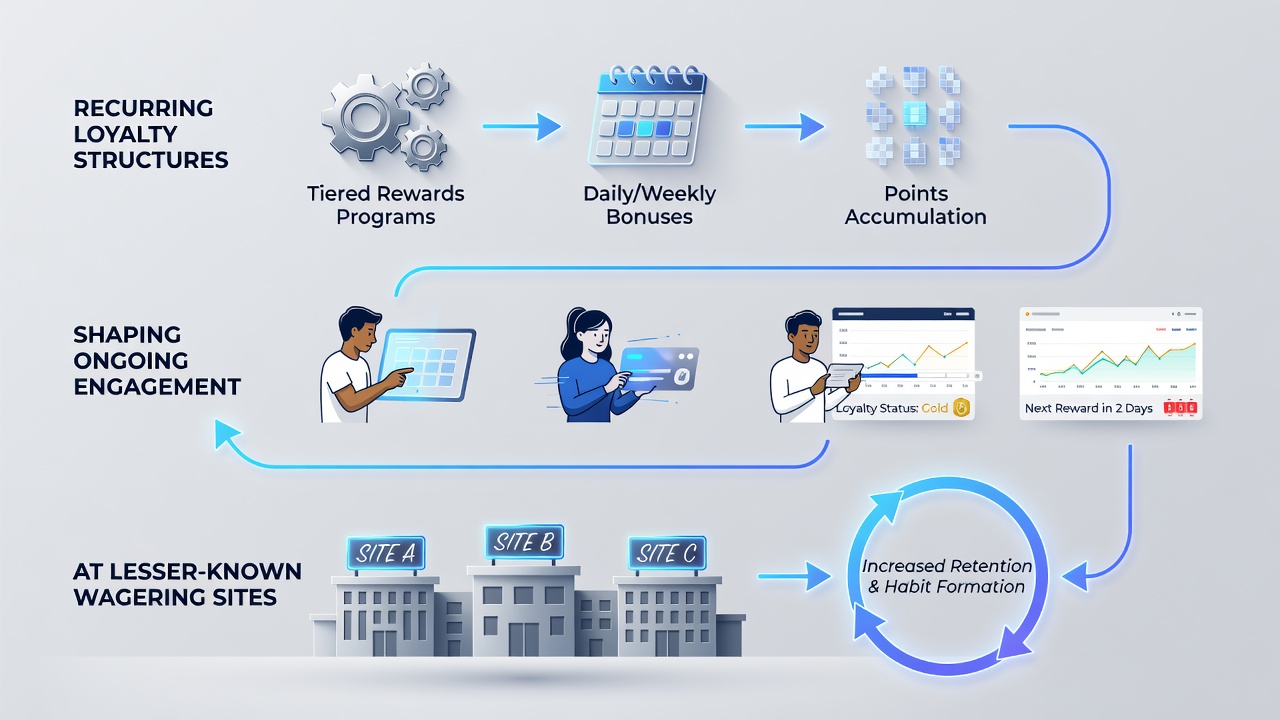
Smaller platforms structure their programs so that daily login streaks generate incremental points which compound into weekly bonuses, and these in turn feed into monthly loyalty ladders. Research from the University of Nevada Reno shows that participants who reach mid-tier status within the first 90 days exhibit a 47 percent higher return rate over the following quarter compared with new registrants who receive only initial sign-up incentives. Points typically convert at fixed ratios, such as 100 points equaling one pound in bonus credit, while higher tiers reduce the conversion rate to 80 points per pound and add free bet vouchers that carry lower wagering requirements.
Regional Regulatory Context in September 2026
By September 2026 several independent operators based outside major licensing jurisdictions began publishing anonymized retention statistics that highlight how recurring structures correlate with session length. Data compiled by the New Jersey Division of Gaming Enforcement indicates that sites offering weekly reload matches tied to loyalty level saw average session durations increase from 18 minutes to 27 minutes among players who had accumulated at least 2,500 points. Those figures emerged from quarterly filings that also noted a parallel rise in responsible gambling tool usage when loyalty dashboards displayed clear progress toward the next reward bracket.
Engagement Patterns Observed Across Platforms
Operators differentiate themselves by layering time-limited multipliers onto existing point systems, so that weekend wagers earn double points while midweek activity maintains baseline accumulation. Observers note that players who engage with these multipliers frequently migrate from daily micro-bets to larger single wagers once they near a tier threshold, because the marginal value of each point rises as the next reward level approaches. One analysis released by the Australian Institute of Family Studies in mid-2026 examined 14 smaller international platforms and found that loyalty-driven reload offers accounted for 31 percent of total player deposits during the second quarter, surpassing the contribution of traditional welcome packages.
Comparative Retention Metrics
Independent sites that publish retention dashboards reveal that players enrolled in recurring programs maintain active accounts for an average of 5.8 months, whereas those limited to one-time promotions drop off after 2.3 months. The difference appears most pronounced among users who receive personalized milestone notifications, such as an alert when 80 percent of the required points for the next tier have been collected. Industry reports compiled by the European Gaming and Betting Association further indicate that smaller operators using automated cashback schedules tied to loyalty tiers experience a 22 percent reduction in dormant accounts compared with platforms that distribute rewards on a fixed calendar regardless of individual activity levels.
Implementation Challenges and Adjustments
Platform developers adjust loyalty algorithms quarterly to prevent point inflation, which occurs when high-volume users accumulate credits faster than the reward pool can sustain. Adjustments often involve raising the point requirements for top tiers while simultaneously increasing the value of mid-tier benefits, thereby flattening the reward curve. Those who have studied these changes observe that transparent communication of adjustments through in-app messages correlates with sustained participation, whereas abrupt modifications without prior notice lead to temporary spikes in account closures.
Conclusion
Recurring loyalty structures at lesser-known wagering sites continue to evolve through data-driven refinements that link point accumulation directly to measurable engagement indicators. As operators refine tier thresholds and reward frequencies, the relationship between sustained participation and structured incentives remains a central focus of both platform analytics and external regulatory reviews.