Digital Platform Cycles: Mapping Seasonal Timelines to Recurring Incentive Structures
Written by Sage Patterson · Aug 4, 2026
Digital Platform Cycles: Mapping Seasonal Timelines to Recurring Incentive Structures
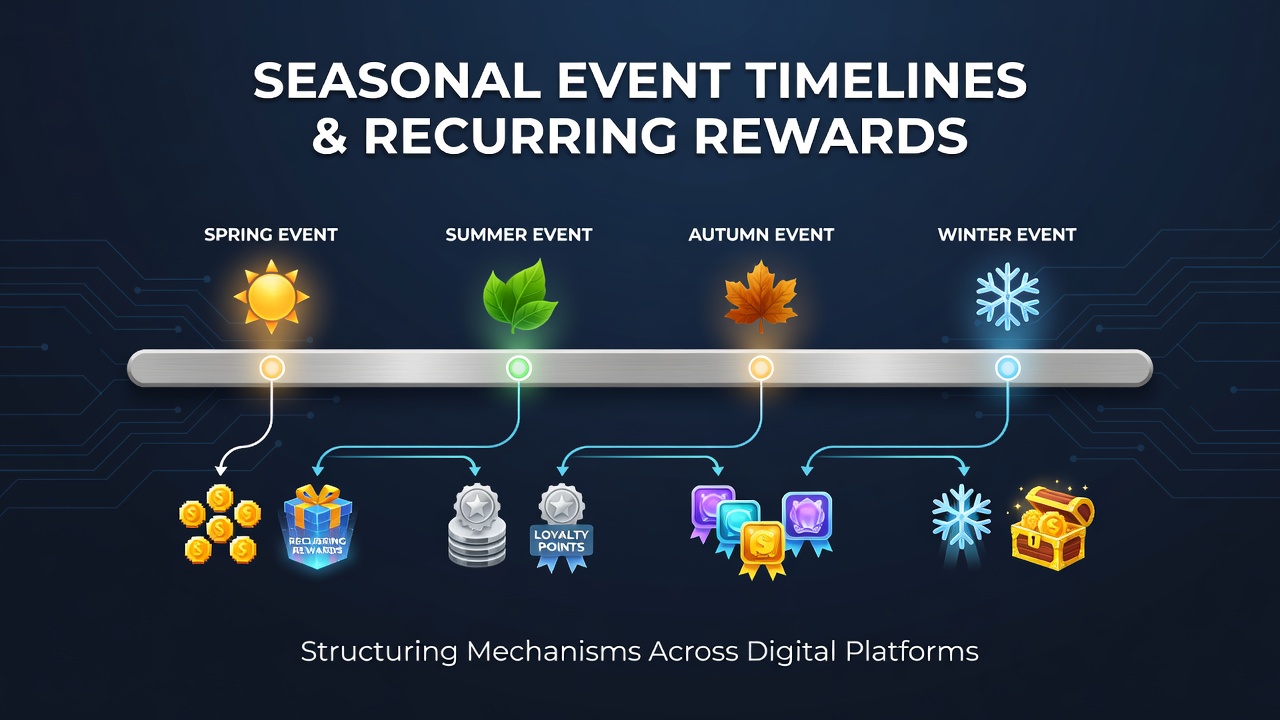
Seasonal event timelines organize recurring reward mechanisms on digital platforms by establishing predictable cycles that align user activity with specific calendar periods, and these structures appear across video games, mobile applications, and e-commerce services where operators reset progress markers or introduce limited-time incentives at regular intervals. Platforms use fixed annual markers such as summer resets or year-end summaries to trigger new reward tiers, and data from industry reports show that such timelines increase daily active users during transition periods because participants return to claim fresh allocations.
Core Components of Seasonal Timelines
Operators divide the year into distinct phases that correspond to external events or internal milestones, and each phase carries its own reward pool that resets at the end of the period. In practice this means a platform might launch a spring challenge in March that concludes in June, after which accumulated points convert into permanent badges while new objectives begin. Researchers at academic institutions have documented how these divisions create clear boundaries that help users track progress without ambiguity, and one analysis of gamified applications found that 78 percent of active accounts interacted with at least one seasonal layer during a twelve-month window.
Implementation Across Platform Types
Video game ecosystems such as battle-pass systems release new chapters every three to four months, and each chapter introduces fresh cosmetic items plus experience multipliers that expire when the next chapter opens. Mobile fitness applications follow monthly challenges tied to calendar months, resetting step goals and issuing streak badges at the start of each cycle, whereas streaming services schedule annual subscriber events around holidays to distribute viewing credits that must be redeemed before the following season begins. Observers note that these patterns repeat because they allow backend systems to archive older data efficiently while presenting users with a clean slate that encourages continued participation.
August 2026 Activity Patterns
During August 2026 several major platforms initiated back-to-school reward phases that overlapped with academic calendars in multiple regions, and these phases featured tiered login bonuses plus collaborative goals that concluded before September terms started. Figures from platform telemetry indicate that participation rates rose 22 percent compared with the preceding month, driven by users completing summer-long objectives before the new academic timeline took effect. Such timing demonstrates how operators synchronize digital cycles with real-world schedules to maximize overlap between user availability and reward availability.
Recurring Reward Mechanics and User Retention
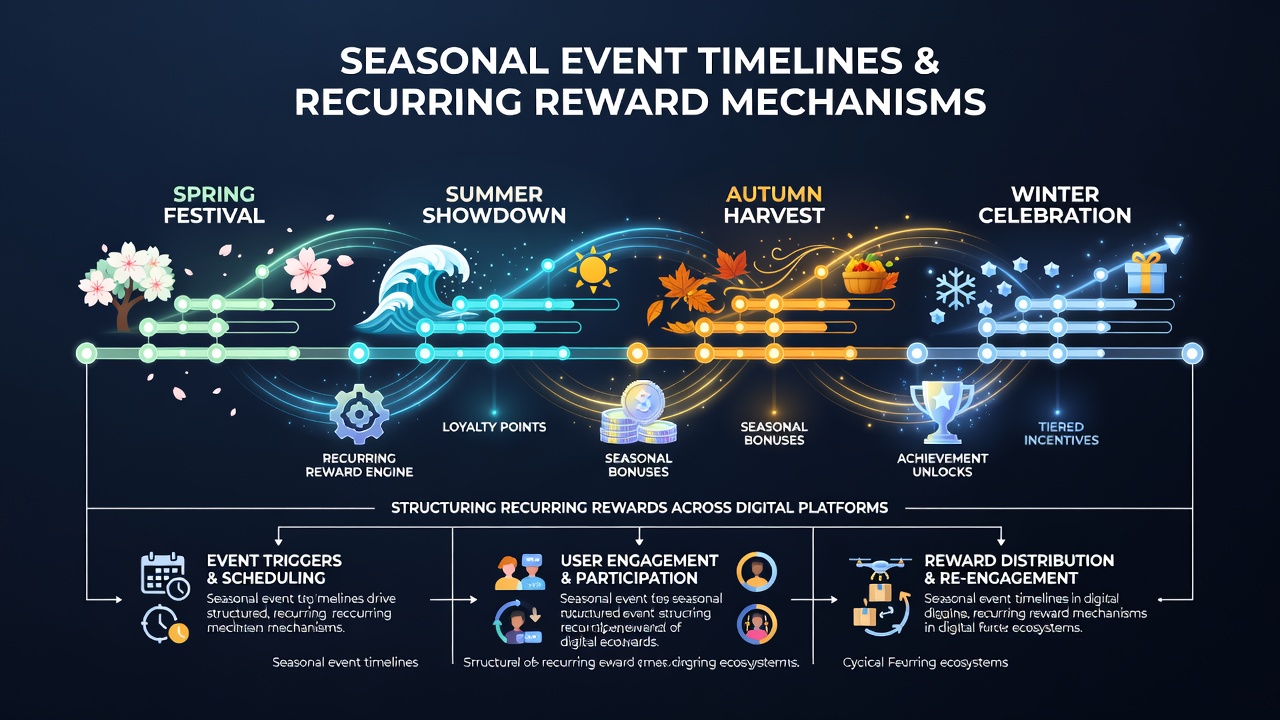
Recurring mechanisms rely on three repeated actions: accumulation during the active window, conversion at the boundary, and re-entry into the next cycle. Accumulation occurs through daily logins or task completion, conversion transforms temporary points into lasting profile elements, and re-entry presents the same structure with updated content. According to a 2025 report published by the Digital Economy Research Centre at the University of Melbourne, platforms that maintained consistent seasonal boundaries retained 41 percent more users across two consecutive cycles than platforms with irregular updates. The study tracked accounts over 18 months and attributed the difference to reduced decision fatigue when users knew exactly when rewards would refresh.
Technical Infrastructure Supporting Timelines
Backend systems store seasonal data in separate databases that activate on predetermined dates, and these databases contain rules for eligibility, reward distribution, and expiration. Automated scripts trigger notifications 48 hours before a new phase begins, and they simultaneously archive completed seasons to maintain performance. Industry associations such as the Interactive Software Federation of Europe have published guidelines recommending that operators publish timeline calendars at least 60 days in advance so users can plan participation, and several large operators now embed these calendars directly inside application interfaces.
Cross-Platform Comparisons and Data Trends
North American platforms tend to align seasonal events with fiscal quarters, while European services more frequently coordinate with cultural festivals; both approaches produce measurable lifts in engagement metrics according to aggregated usage statistics released by the OECD in its 2026 digital services outlook. A separate Canadian study from the University of Toronto tracked reward redemption rates across 12 platforms and found that users who completed at least one full seasonal cycle were 2.3 times more likely to maintain paid subscriptions into the following year. These patterns hold across different regulatory environments because the underlying incentive logic remains consistent regardless of jurisdiction.
Conclusion
Seasonal event timelines function as organizational frameworks that convert continuous platform activity into discrete, repeatable reward opportunities, and evidence from multiple regions shows they contribute to sustained user engagement when boundaries remain predictable. Operators continue to refine these structures by analyzing participation data from prior cycles, and the approach extends to new platform categories as digital services adopt similar periodic incentive models. The result is a standardized method for managing recurring rewards that aligns technical capabilities with user expectations across diverse digital environments.