Deposit Matching Strategies and Accumulator Engagement Levels in Mid-Sized Operators
Written by Sage Patterson · Jul 28, 2026
Deposit Matching Strategies and Accumulator Engagement Levels in Mid-Sized Operators
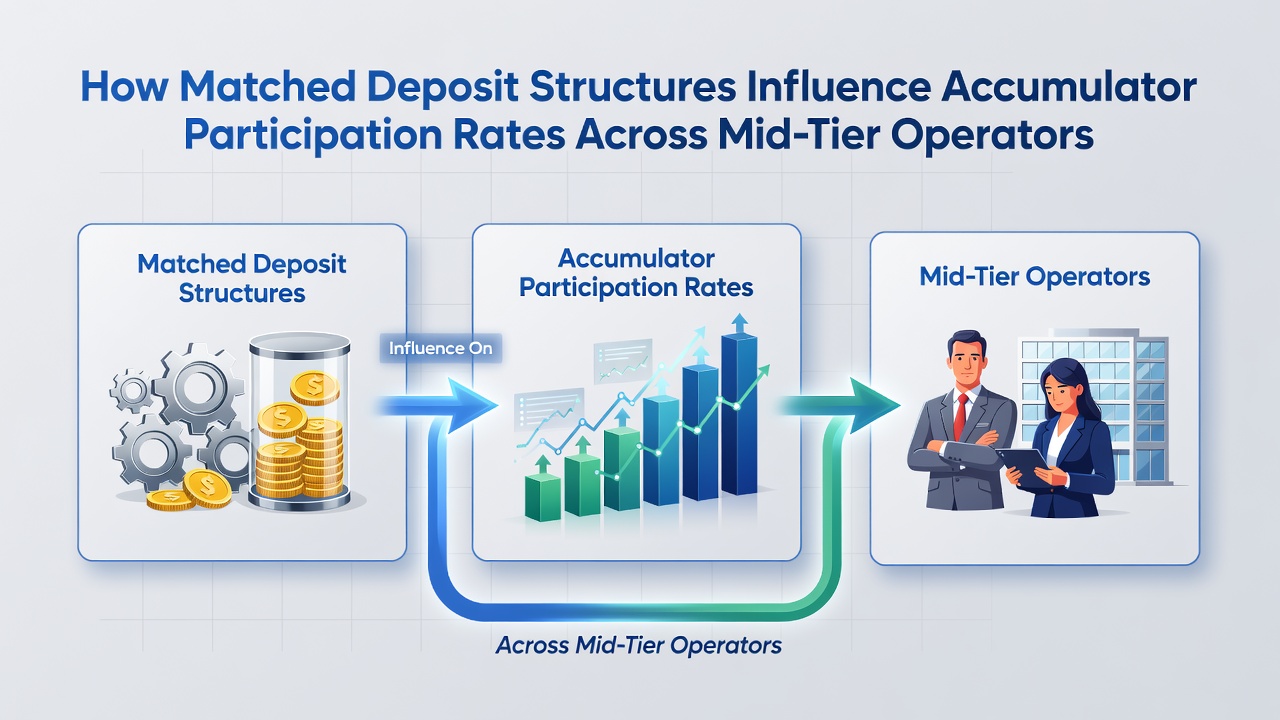
Matched deposit structures have become a central mechanism for mid-tier operators seeking to increase accumulator participation rates since early 2025, with patterns emerging clearly by July 2026. These incentives typically involve operators matching a percentage of a player's initial deposit up to a set limit, and the resulting bonus funds often carry wagering requirements that favor multi-leg bets such as accumulators. Data collected from platform analytics across several jurisdictions shows that operators offering 100% matches up to £50 or equivalent amounts record higher volumes of accumulator activity compared with those providing smaller or no matches.
Mechanics of Matched Deposits in Mid-Tier Settings
Mid-tier operators, defined as those handling between 2% and 8% of total market volume in their respective regions, structure these promotions to align bonus releases with accumulator selections. The process usually requires players to place accumulator bets that meet minimum odds thresholds before bonus amounts convert to withdrawable cash. Operators in Australia and parts of Canada have documented similar approaches, where bonus credits must be used on bets with three or more selections. This setup encourages participants to construct accumulators rather than single-event wagers because the higher total odds help satisfy turnover conditions more efficiently.
Research from the University of Nevada's International Gaming Institute indicates that mid-tier platforms using tiered match rates, such as 50% on the first deposit and 25% on subsequent ones, maintain steadier accumulator participation throughout the month. The same report highlights that single large matches front-loaded at signup produce sharp spikes followed by declines once initial bonuses are cleared. Operators adjust these structures based on internal data tracking bet type distribution, and many now tie match percentages directly to historical accumulator uptake metrics collected in the preceding quarter.
Observed Participation Rate Shifts
Figures released by several mid-tier groups in July 2026 reveal that accumulator bets accounted for 34% of total handle on matched deposit days, compared with 21% on standard trading days. The increase appears consistent across football and horse racing markets, where multi-leg combinations naturally fit the bonus terms. Operators report that players who receive matched deposits place an average of 2.8 accumulators per active session, versus 1.4 for those depositing without promotional support.
One case study from a Canadian operator showed that introducing a 75% match capped at CAD 100 lifted accumulator participation from 19% to 31% of all bets within six weeks. The change coincided with revised bonus terms requiring at least four selections per accumulator, which prompted players to extend their bet slips rather than settle for doubles or trebles. Similar adjustments in smaller European markets produced parallel results, suggesting the structure itself influences bet construction more than regional preferences alone.
Regional Variations and Data Sources
Operators in Australia have integrated matched deposits with loyalty tiers, granting higher match percentages to players who already demonstrate accumulator activity. Government reports from the Australian Gambling Research Centre note that this layered approach sustains participation rates above baseline levels for longer periods than one-time offers. In contrast, platforms operating under Malta Gaming Authority oversight tend to apply uniform match rates across all new accounts, resulting in more uniform but shorter-lived spikes in accumulator volume.
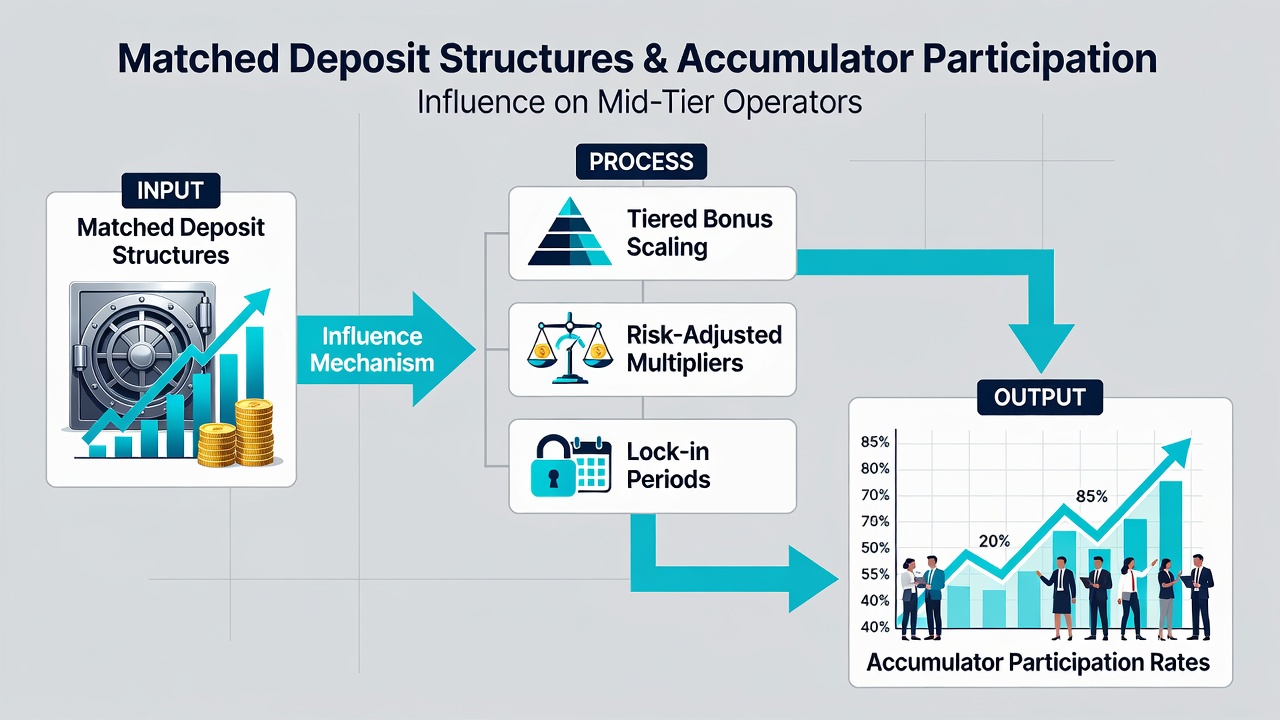
Industry analyses compiled by the European Gaming and Betting Association further show that mid-tier operators achieve better retention when deposit matches include explicit accumulator multipliers. These multipliers add bonus funds proportional to the number of legs in a bet, creating an incentive structure that directly rewards complexity. Participation data collected through June 2026 indicates that such multipliers increase the share of five-leg accumulators by roughly 12 percentage points compared with standard bonus terms.
Operational Adjustments and Player Behavior
Mid-tier operators continuously refine matched deposit parameters based on real-time accumulator metrics. Some have shortened the validity window for bonus funds to seven days, which correlates with elevated daily accumulator counts as players attempt to clear requirements quickly. Others extend the window to 30 days but raise the minimum odds threshold, producing steadier but lower daily volumes. Both approaches appear in current market practice, and neither shows clear superiority in long-term participation sustainability according to aggregated platform reports.
Player segmentation data reveals that those classified as moderate-risk bettors respond most strongly to matched deposits when accumulator options are highlighted during the deposit process. Operators who place accumulator builders prominently on deposit confirmation screens record higher conversion from bonus receipt to multi-leg betting. This placement effect holds across different match percentages, suggesting interface design interacts with the financial incentive to shape participation patterns.
Conclusion
Matched deposit structures continue to shape accumulator participation rates among mid-tier operators through specific design choices around match percentages, wagering requirements, and multipliers. Data gathered through July 2026 demonstrates measurable shifts in bet-type distribution when these elements are adjusted, with consistent patterns appearing across multiple regulatory environments. Operators track these metrics internally to calibrate future offers, and the resulting structures remain a primary lever for influencing multi-bet activity in this segment of the market.